
Movement Talent’s Model: Building Equitable Hiring as Movement Infrastructure
The Problem
Grassroots social justice organizations hire under extreme pressure without a dedicated human resources infrastructure. Under-resourced and operating with urgent timelines, even deeply values-aligned organizations struggle to implement structured, equitable hiring practices—especially for mid- and senior-level positions.
Our Solution: Accompaniment, Not Training
We embed equitable hiring practices into active searches—working alongside organizations to build capacity in real time, not through one-off workshops.
What We Provide
Open-Source Toolkit:
- Structured hiring standards and evaluation rubrics
- Bias-reducing interview templates
- Candidate experience standards
- Onboarding/offboarding practices
Direct Implementation Support:
- Real-time coaching during live searches
- Training for hiring managers and boards
- Candidate coaching and career navigation
- Peer learning networks
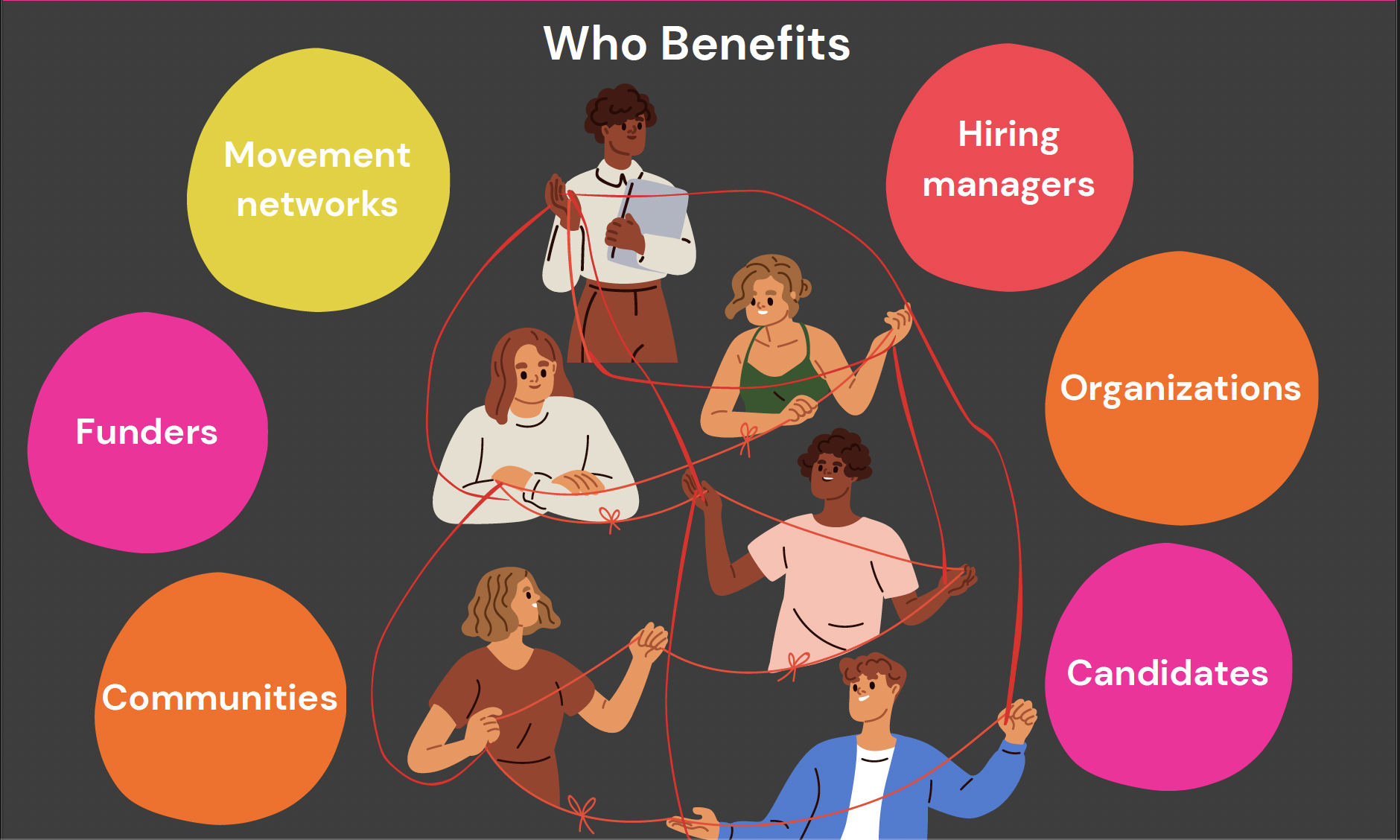
Building Infrastructure, Not Just Filling Positions
This model creates systems-level change. Tools and practices spread through networks, building shared movement infrastructure rather than supporting organizations one at a time.
Proven Track Record: Six years supporting 100+ organizations through hundreds of searches, field-tested with thousands of candidates.
Three Scaling Pathways:
- Open-source tools organizations can adapt independently
- Ambassador networks facilitating local implementation
- Integration into existing leadership programs and movement ecosystems
Measurable Outcomes:
- Increased hiring transparency and reduced bias
- More diverse mid- and senior-level pipelines
- Higher satisfaction for candidates and hiring managers
- Reduced organizational burnout
What Organizations Gain
- Practical tools that work under pressure
- Real-time support during active searches
- Capacity-building teams can use independently
- Access to broader, more diverse talent pools
- Reduced bias through structured processes
What Job Seekers Experience
- Clearer pathways into movement roles
- Transparent processes that reduce guesswork
- Recognition of transferable skills
- Better candidate experience throughout hiring
- Support navigating non-linear career paths